
The Dopamine Hack: How Substack Writers Create Addictive Reader Communities
Inside the Psychological Triggers That Turn Casual Subscribers Into Loyal Superfans (Science-Backed Strategies Every Newsletter Creator Needs)

The relationship between Substack writers and their readers represents one of the most fascinating psychological phenomena of our digital age: the parasocial relationship.
Readers develop authentic emotional connections with writers they've never met in this one-sided intimacy.
I discovered this firsthand when a reader emailed me saying:
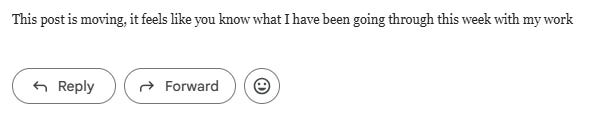
We'd never met, yet there she was, feeling a genuine connection through words on a screen.
That's when I realised something profound was happening beneath the surface of Substack's simple email delivery system.
This is the cornerstone of Substack's entire ecosystem.
While so many writers focus on subscription metrics and content strategies, they've largely overlooked how the platform has industrialised parasocial bonds into perhaps the most effective community-building mechanism in digital publishing.
The Science of One-Sided Intimacy
When a writer's personal, unfiltered, and intimate words arrive directly in your inbox, the brain processes this differently than content consumed on social platforms.
The consistent voice, perspective, and rhythmic delivery create what psychologists call "parasocial familiarity."
A sense that we know the writer personally, triggering the same neurological reward pathways activated by actual social bonds.
Their research, revisited and expanded by Hartmann and Goldhoorn (2011), found that parasocial relationships can generate emotional responses neurologically indistinguishable from real relationships, explaining why subscribers often defend their favourite writers with surprising passion
The implications are profound.
Readers don't just follow writers for information.
They follow them for connection.
The emotional investment often exceeds what's rational for mere content consumption, establishing the foundation for Substack's remarkable subscriber retention rates.
The Primal Pull of Digital Tribes

We aren't primarily rational creatures.
The same tribal instincts that bound our ancestors in hunter-gatherer bands now find expression in Substack communities, where writers aren't merely content producers but modern chieftains presiding over digital campfires.
I've felt that peculiar warmth when reading the latest edition from my favourite writers as if I'm sitting around a fire with them, part of their inner circle, even though they have no idea who I am.
Baumeister and Leary's influential work on "the need to belong" (1995) established that humans possess "a pervasive drive to form and maintain at least a minimum quantity of lasting, positive, and impactful interpersonal relationships."
Their research demonstrates this isn't a preference.
It's a fundamental human need, as essential as food or shelter
This explains why exclusive Substack communities are so compelling.
When subscribers gain access to a writer's inner circle, they're not just purchasing content.
They're satisfying a neurological imperative as fundamental as hunger or thirst.
The Hidden Levers of Cognitive Biases
The endowment effect ensures subscribers value paid content more highly. Kahneman, Knetsch, and Thaler's experimental tests (1990) demonstrated that people place a higher value on things simply because they own them
The moment a reader subscribes, their brain recategorizes your content as more valuable not because it is but because they've invested in it.
Loss aversion explains why trial subscriptions convert so effectively.
Tversky and Kahneman's reference-dependent model (1991) established that "losses loom larger than gains."
This is predictive mathematics that explains why "last chance" reminders consistently outperform other messaging.
Engineering Brain Chemistry Through Publication Schedules
Admit it: you've checked your inbox multiple times on the day your favourite newsletter is due to arrive.
I know I have.
That little rush of excitement when it finally hits is chemistry.
Predictable publication schedules manipulate dopamine circuits in powerful ways.
This is why the most successful Substacks publish with metronomic consistency.
Anticipatory dopamine spikes can be more potent than consumption-related rewards, explaining why the anticipation of your Thursday newsletter might create more neurological pleasure than actually reading it.
The Truth About Community Building
Building a Substack community isn't primarily about better writing.
It's about skillfully engaging fundamental human social drives.
Belonging, status, reciprocity, and identity.
The most successful writers create in-group terminology that signals belonging.
Position your publications not as products but as identity markers for readers to signal their values and affiliations.
Patterns of Success
Publications create variable reward patterns generating stronger dopamine responses than predictable rewards, as shown in addiction research.
The Path Forward
I was just sharing information when I started writing on Substack.
Now I understand I'm creating a space where people can belong and feel seen and understood in increasingly rare ways in our fractured digital landscape.
Understanding these mechanisms presents both opportunity and responsibility.
The science is clear: Substack's most successful communities aren't just collections of readers.
They're carefully engineered social organisms responding to psychological triggers as old as humanity.
Those who master this hidden architecture create digital tribes that satisfy our deepest social needs in an increasingly fragmented world.
I've experienced this connection from both sides now as a devoted reader and as a writer watching my own community form, and there's something genuinely beautiful about it when done with intention and care.
The mechanisms are there. Will you use them?
See you soon!
really like the picture from the first nomads :) could be us haha
It is interesting how you use the first-person, intimate-dialogue features to deliver your (very) technical comment, a cool hybrid style. I agree with you, and I wasn't aware of it. I've been thinking about authorship and the publishing universe with the advent of AI: my hypothesis is that authoral work will enjoy some preference in several niches. With most of the (mostly technical), manual-style and even self-help content made predominantly by AI, authoral material may be in demand for two reasons: supply and demand, and need for human connection.