
Obinna
Legendary iron from the blacksmiths forge

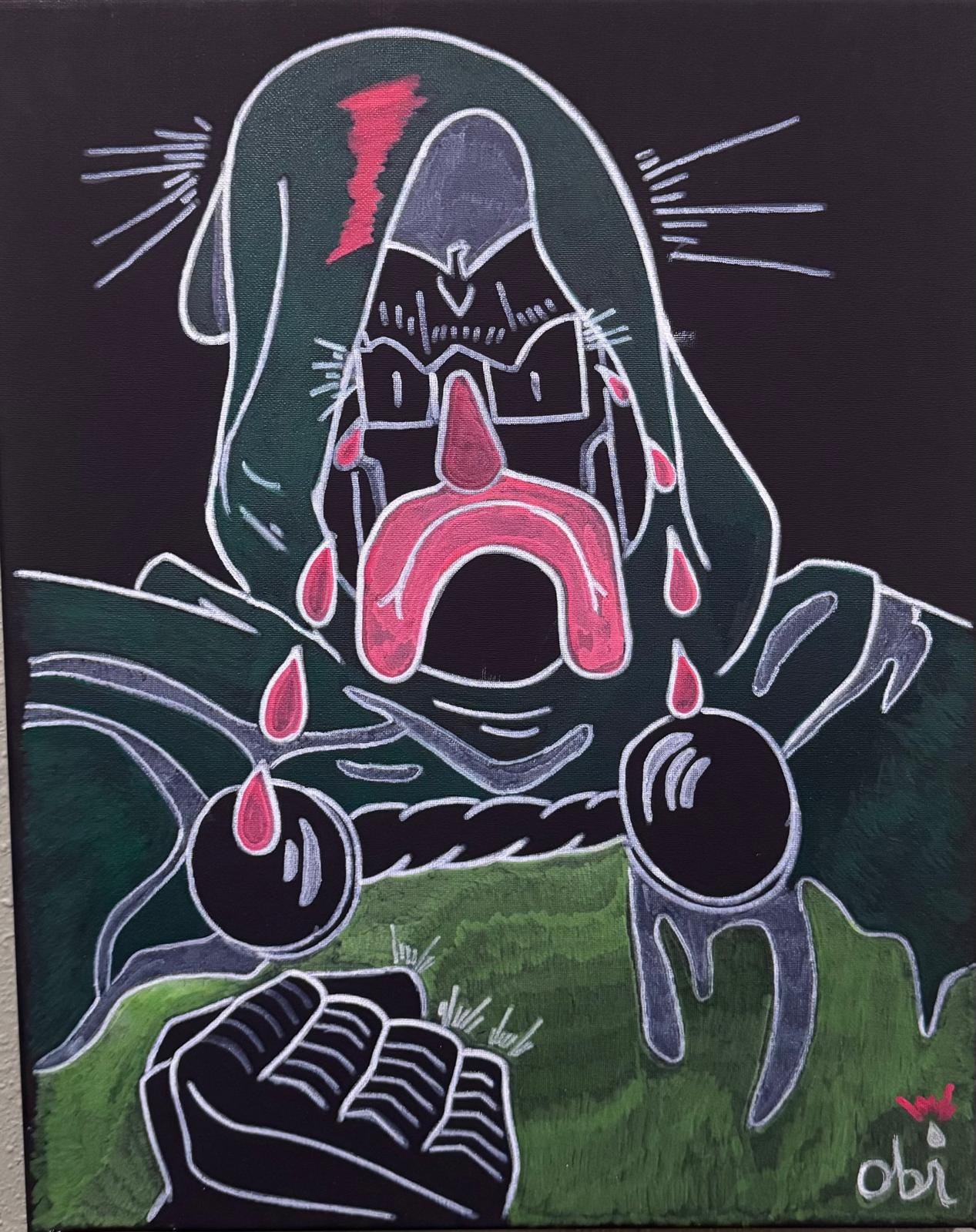
“In my feelings can’t lie, I don’t wanna waste your time. Gotta be a better person. For me, for you”
It is understood far and wide that the question of being authentic is dependent on an outcome, that is to say, or maybe even derive a hypothesis that there is no authenticity anywhere, because if being authentic as appearing to the public as the real you is just the means to a result, then who is really wearing a mask? Or “THE” mask.
From this understanding, I draw the intuition that nobody is being themselves in a world full of masks.
Macchiaveli believed humans only pretend to be good; beneath the rules and kindness, he said, were beasts driven by desire. Morality is a mask, where the goal isn’t to be good but to be effective.
My invocation of Macchiaveli cut to the heart; Veli did not argue that humans pretend to be good, he also suggested that there may be no meaningful distinction between genuine virtue and its effective performance.
The prince, who appears merciful, achieves the same political result as the one who feels true mercy; in Veli’s framework, the inner life becomes irrelevant.
But if everyone is wearing a mask, if all morality is strategic performance, then what are we performing for? other performers?
I would like to suggest that relationships tend to carry a weight of exhaustion, but even in this recognition, there is a weariness. The modern condition has programmed us to see through performances, including ours, yet still requires us to perform. Certain borrowed moral languages remain conventional and hollow, and yet we fail to speak about them.
In this case, I would like to suggest again that the self we are trying to be authentic to might be another construct, “ a mask beneath a mask”. Veli’s beast is the performance. Desire, self-interest, the will to be effective.
If there’s no authentic self to discover, if every gesture toward honesty is itself a strategic move in the social game, then perhaps the question isn’t “who is really wearing THE mask?”
Perhaps the question is: In a world where every face is a mask, what kind of mask should we choose to wear?
And maybe that choice made with full awareness of its own artificiality is the closest we can come to something real.
But let’s dig deeper into this disturbing terrain. If we accept that masks go all the way down, we must confront what philosophers call the problem of infinite regress. Peel away one mask, and there’s another. Peel away that one, and there’s another still. At what point do we reach bedrock? At what point do we find the “true” self?
The existentialists Sartre, Camus, and Kierkegaard wrestled with this vertigo. Sartre argued that humans are “condemned to be free,” that we have no essential nature, no fixed self waiting to be discovered. We are, he claimed, nothing but the sum of our actions, our choices, our performances. There is no ghost in the machine, no soul behind the curtain. We are the performance.
This is both liberating and terrifying. Liberating because it means we’re not bound by some predetermined essence, some “authentic self” that we must discover and honour. Terrifying because it means there’s no solid ground, no ultimate truth about who we are. We’re making it up as we go along, and the performance never ends.
See you in the next one!
You are in a special place on your journey. A sugg.
https://sheilazimmerman.com/2022/05/22/the-s-heros-journey/